On this page
- Why most Japanese words lists don't stick
- How to read this list in 60 seconds
- The survival words you'll actually use day one
- Food, money, and travel words
- Numbers, time, and days
- Real Japanese vs. textbook Japanese
- Beautiful Japanese words English can't translate
- Internet and anime words natives really use
- See every word in the wild
- Your next 30 days: a tiny routine that beats memorizing 500 words
- FAQ
- The Bottom Line
- Put it into practice with HayaiLearn
Why most Japanese words lists don't stick
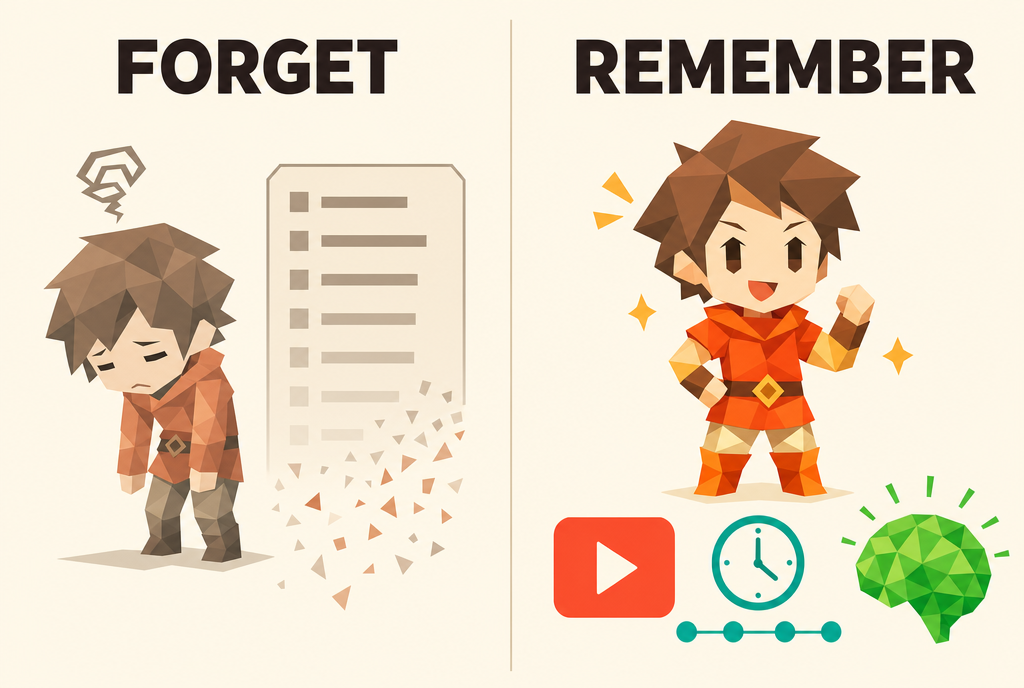
You read a "100 most common Japanese words" post, nod along, and remember almost none of it. Three reasons why, each with its fix.
No testing. Reading a word is not remembering it. Your brain files something away only when it has to pull it back out. In studies, learners who tested themselves beat learners who just reread.1
No spacing. A list drops 100 words on you at once, and most are gone by tomorrow. Seeing a word again right before you would forget it (spaced repetition) is what makes it stick.2
No context. Words sit alone, or inside dead sentences like "Watashi wa Paul desu." You learn a word by meeting it in real speech, just past your current level. Linguists call this comprehensible input, or "i plus 1."3
The fix: test yourself, space it out, and meet each word in real context. This list is built that way.
How to read this list in 60 seconds
Every table below has three columns. Here is what they mean, so nothing trips you up.
Kana is the Japanese writing system: hiragana and katakana, forty-six sounds each. Right now it probably looks like squiggles. You can learn both in a weekend, and it is the best first move you can make, because leaning on romaji quietly locks in a bad accent.
Romaji is just the English spelling of those sounds, like arigatou. It sits in every table so you can read along from day one. Training wheels, not the bike.
JLPT level is the official difficulty scale, from N5 (beginner) up to N1 (near native). Almost every word on this page is N5. That is the good news: the most useful Japanese words are also the easiest ones to learn.
Pro tip: If you do just one thing before a trip to Japan, learn hiragana. The whole language stops looking like noise the moment those squiggles turn into sounds you can read.
The survival words you'll actually use day one
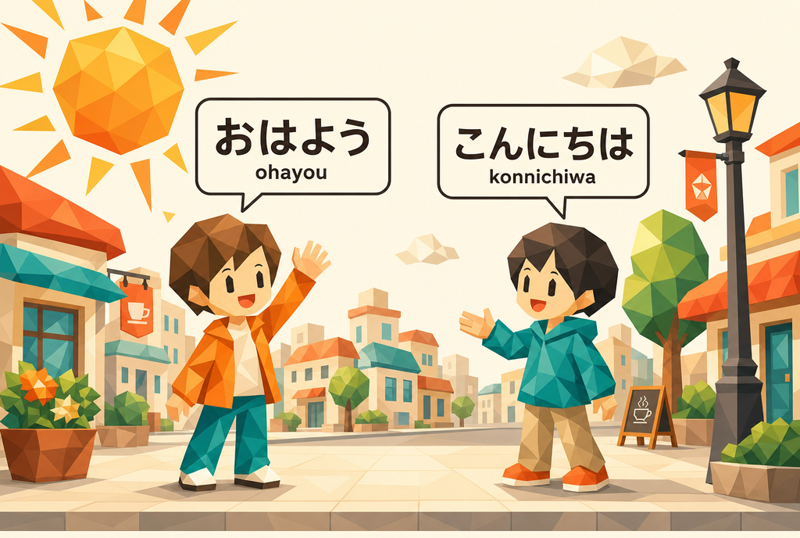
These are the words that get you through a real day in Japan: greetings, yes and no, please and thank you, and the question words that fix almost any problem.
Greetings and the magic polite words
| Japanese | Romaji | English |
|---|---|---|
| こんにちは | konnichiwa | hello (daytime) |
| おはよう | ohayou | good morning (casual) |
| こんばんは | konbanwa | good evening |
| ありがとう | arigatou | thank you |
| すみません | sumimasen | excuse me / sorry |
| お願いします | onegaishimasu | please |
| はい | hai | yes |
| いいえ | iie | no |
| ごめんなさい | gomennasai | I'm sorry |
| はじめまして | hajimemashite | nice to meet you |
すみません is the real MVP. It means "excuse me," "sorry," and "hey, over here" all at once. You will use it fifty times a day.
Here is one of these greetings in actual speech, not a textbook. A real person, on camera, just saying hello to the room.
皆さんこんにちは
Hello, everyone.
Question words that save you
| Japanese | Romaji | English |
|---|---|---|
| どこ | doko | where |
| なに | nani | what |
| だれ | dare | who |
| いつ | itsu | when |
| いくら | ikura | how much |
| これ / それ / あれ | kore / sore / are | this / that / that over there |
| だいじょうぶ | daijoubu | okay / I'm fine |
| わかりました | wakarimashita | got it / understood |
| わかりません | wakarimasen | I don't understand |
| ちょっと | chotto | a little / hold on |
String two of these together and you can solve almost anything. Point at something, say これ, add いくら, and you just asked the price.
Food, money, and travel words
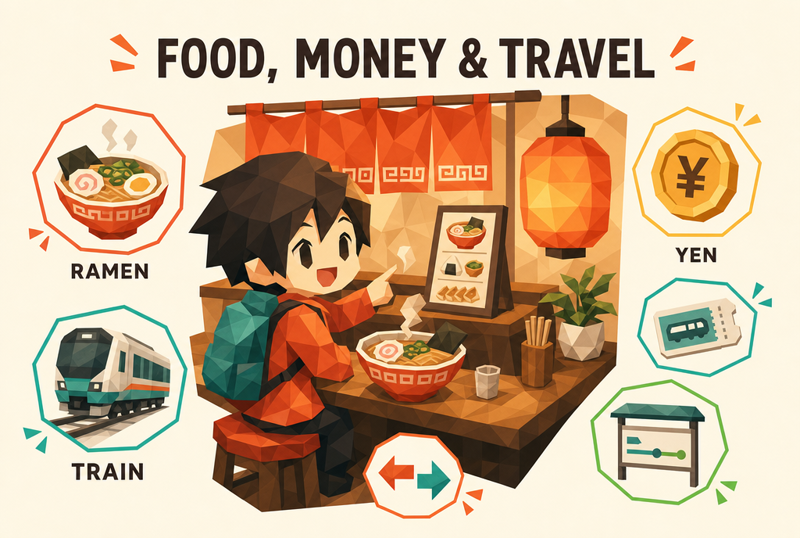
This is the set that gets you fed and gets you home. Restaurants, trains, and paying for things.
| Japanese | Romaji | English |
|---|---|---|
| みず | mizu | water |
| ごはん | gohan | rice / meal |
| おいしい | oishii | delicious |
| メニュー | menyuu | menu |
| おかいけい | o-kaikei | the bill / check |
| えき | eki | (train) station |
| トイレ | toire | toilet |
| みぎ / ひだり | migi / hidari | right / left |
| まっすぐ | massugu | straight ahead |
| きっぷ | kippu | ticket |
| げんきん | genkin | cash |
| カード | kaado | card |
Try it: Walk into any restaurant, say すみません, point at the menu, say これお願いします ("this one, please"), and you have ordered like a local. No full sentences required.
Numbers, time, and days
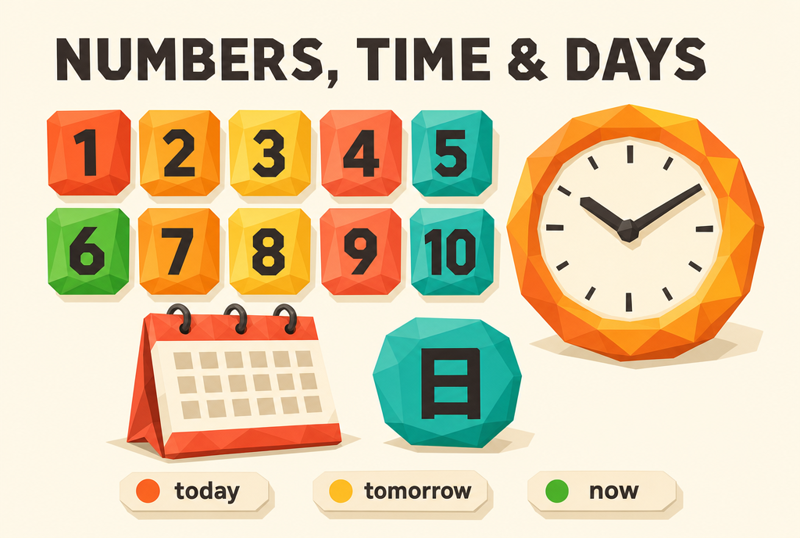
Not glamorous. Completely essential. You cannot pay, catch a train, or make plans without these.
The numbers one through ten: いち、に、さん、よん、ご、ろく、なな、はち、きゅう、じゅう (ichi, ni, san, yon, go, roku, nana, hachi, kyuu, juu).
| Japanese | Romaji | English |
|---|---|---|
| きょう | kyou | today |
| あした | ashita | tomorrow |
| きのう | kinou | yesterday |
| いま | ima | now |
| じ | ji | o'clock (hour) |
| ふん / ぷん | fun / pun | minute |
| えん | en | yen |
Want proof these words live outside a textbook? Here is あした (tomorrow) the way a real speaker dropped it mid-sentence in a video, not the way a flashcard shows it.
明日も早いので寝たいと思います。
I've got an early start tomorrow too, so I think I'll head to bed.
Real Japanese vs. textbook Japanese
Here is where it gets fun. Textbook Japanese and real Japanese are not the same language wearing different clothes. They sound different.
Textbooks teach full, polite, complete sentences. "これはペンです." (This is a pen.) Grammatically perfect. Nobody says it.
Real Japanese drops the obvious stuff. Pronouns vanish. Verbs get shortened. Little particles like ね and よ get sprinkled in to add feeling. A native might just say "あ、ペン持ってる?" ("oh, you got a pen?"). Same meaning, totally different feel.
Below is a clip of natural speech in the wild. A traveler comparing a place to Tokyo just trails off with なので、あんまり東京みたいに狭い感じがしないかな ("so yeah, it doesn't really feel cramped like Tokyo, I guess"). Notice how compressed and casual that is next to the textbook version.
Can you tell real Japanese from the textbook version? Most beginners cannot, at first. That is exactly the skill this game trains. You see a sentence, you guess "real native" or "textbook," and it shows you the answer with the JLPT level and a quick breakdown.
Real Japanese rarely looks like the textbook. Textbook: "これはペンです" (this is a pen), or "わたしはがくせいです" (I am a student). Natural: "あ、ペン持ってる?" (oh, you got a pen?), or just "おはよう!ということで3日" (morning! so, day three). Natives drop the subject, shorten verbs, and sprinkle in particles like ね and よ for feeling. Learning to hear that difference is the fastest way to stop sounding like a phrasebook.
Beautiful Japanese words English can't translate
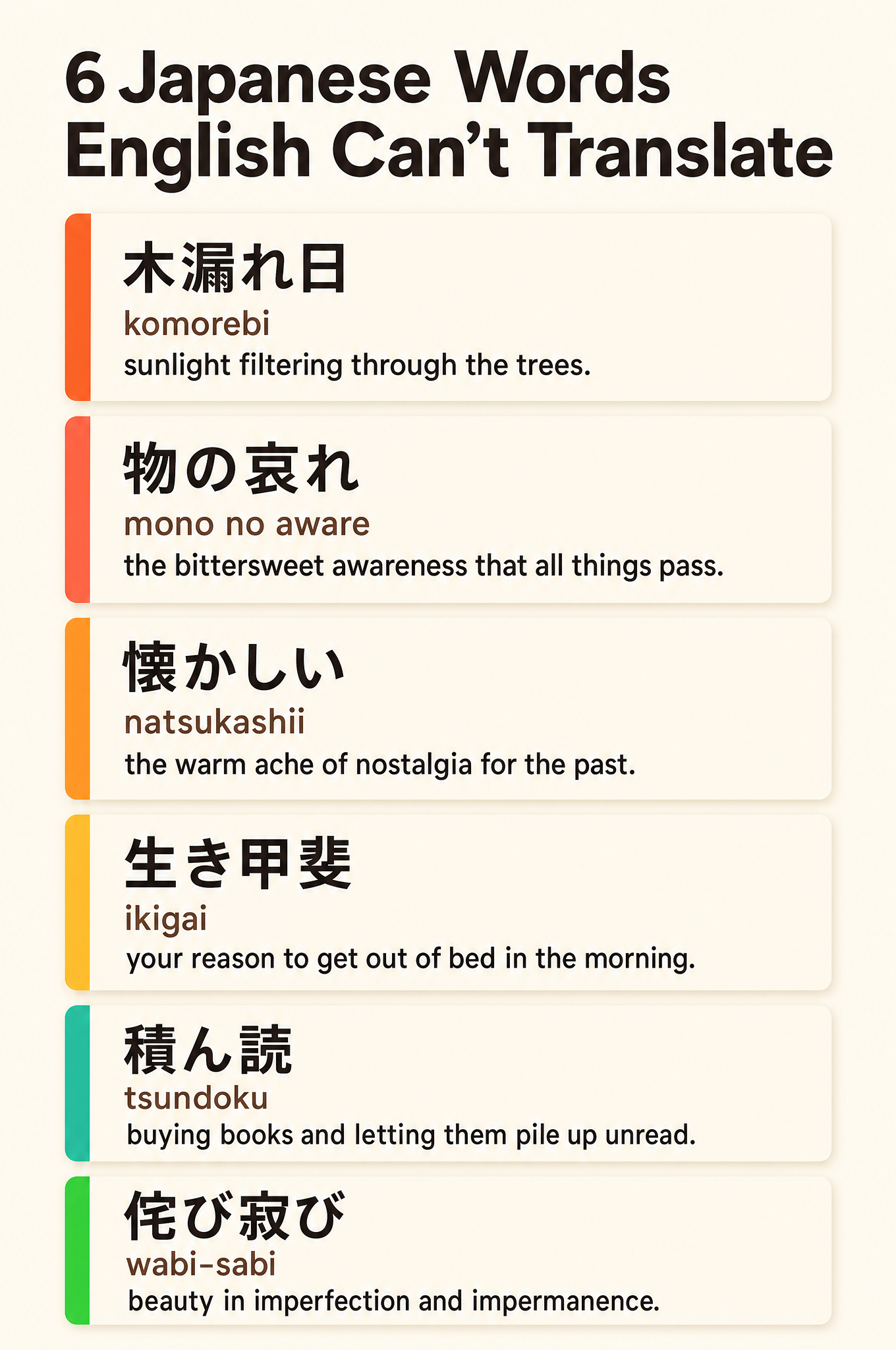
This is the side of Japanese that goes viral, and for good reason. Some words pack a whole feeling into a handful of sounds, and English has no single word for any of them.
- 木漏れ日 (komorebi): sunlight filtering through the leaves of trees.
- 物の哀れ (mono no aware): the gentle, bittersweet awareness that everything passes.
- 懐かしい (natsukashii): the warm ache when something suddenly brings the past back.
- 生き甲斐 (ikigai): your reason to get out of bed in the morning.
- 積ん読 (tsundoku): buying books and letting them pile up, unread.
- 侘び寂び (wabi-sabi): finding beauty in imperfection and impermanence.
These are the words that make people fall for Japanese in the first place. The trick is going from "ooh, pretty" to actually recognizing one when a native uses it. That only happens with real exposure, which is the whole idea behind learning through content you enjoy.
Internet and anime words natives really use
If your real goal is understanding anime, dramas, or your favorite VTuber without subtitles, the textbook lists will fail you completely. Native speakers online talk in slang the JLPT has never heard of.
- やばい (yabai): "crazy," good or bad depending on tone. The Swiss Army knife of slang.
- それな (sore na): "so true," total agreement.
- 草 (kusa): "lol." It literally means "grass," because rows of www (laughing) look like blades of grass.
- 尊い (toutoi): "precious," what fans say about a character or moment they love.
- マジ (maji): "seriously?" / "for real."
- すごい (sugoi): "amazing," "wow," used for absolutely everything.
These are the words that make real Japanese feel alive. The catch is they bend with tone and context. やばい can mean "this is amazing" or "this is a disaster" depending on how it is said. You only really get them by hearing them used over and over, never by memorizing a one-line definition.
Want more of this register? Our breakdown of Japanese slang and swear words by intensity goes deeper on the words you will never find in a classroom.
See every word in the wild
This is the part that fixes the "read it and forget it" problem. Each card below is a word, the real sentence it appeared in, and the timestamped clip so you hear it spoken. You think, you reveal, you rate yourself, and the card comes back on a spaced-repetition schedule.
That loop is the difference between recognizing a word forever and forgetting it by lunch.
The retention fix is spaced repetition with real context. Instead of memorizing a flat list, you drill each word inside the real sentence a native actually said it in, like 明日 (tomorrow) inside "明日も早いので寝たいと思います," then review it again right before you would forget. Rate each card and the schedule pushes it further out as it sticks. This is exactly how HayaiLearn's Review works, using clips pulled from real videos.
This is not a gimmick. It is the core of how HayaiLearn works. Every word you mark as "learning" comes back as a reading or listening drill, scheduled by spaced repetition, pulled from real video clips instead of flashcards somebody typed up.
Your next 30 days: a tiny routine that beats memorizing 500 words
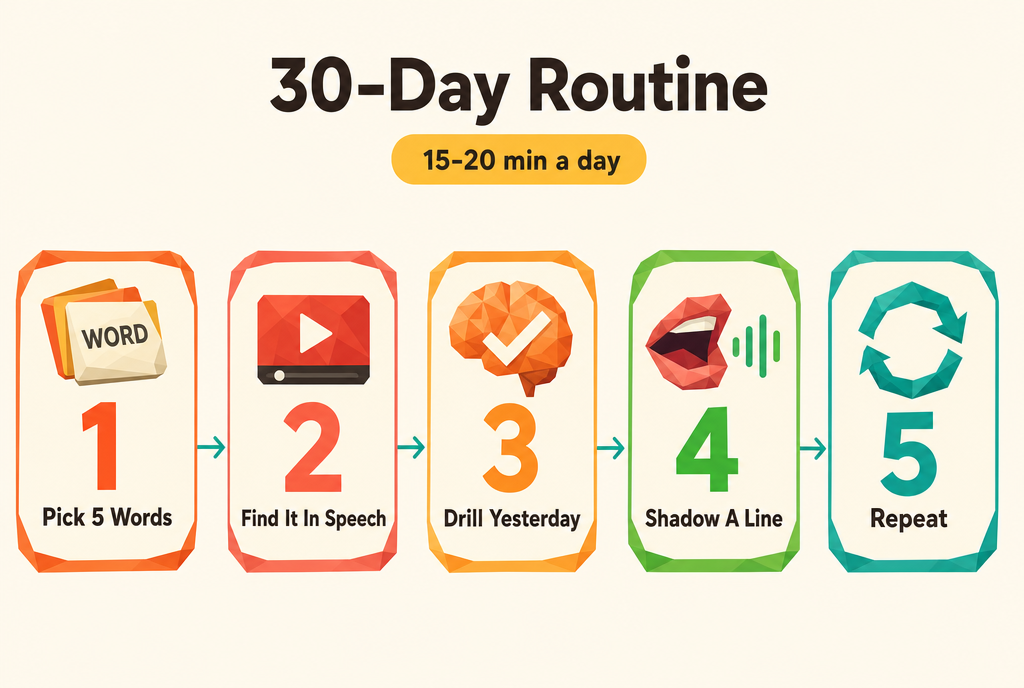
Forget cramming a 500-word list. Nobody finishes those, and the people who do forget 80 percent of it. Here is a routine that actually compounds.
Estimated Time: 15-20 minutes per day
- Pick 5 words a day from the survival set above. Not 50. Five. Say each one out loud.
- Find each word in real speech. Watch a short clip where a native uses it. Hearing it once in context beats reading it ten times.
- Drill yesterday's words first. Before you add new ones, test yourself on yesterday's five. This is the spacing and testing combo doing the heavy lifting.
- Shadow one sentence. Pick one line from a clip and repeat it until it feels natural in your mouth.
- Rinse and repeat. Five new words a day is 150 words a month. All of them stuck, because you met them in real context and tested yourself.
This is the whole philosophy behind learning through immersion instead of grinding lists. You learn the words you keep running into, in the order real Japanese throws them at you.
FAQ
How many Japanese words do I need to be conversational?
Far fewer than you think. A small core of high-frequency words does most of the heavy lifting in everyday speech. In general vocabulary research, the most frequent 2,000 word families already account for over 80 percent of the words in ordinary text.4 Japanese works the same way, so a few thousand common words carry the bulk of casual conversation.
You do not need to know every word. You need to know the common ones cold. That is why a frequency-based approach beats a random vocabulary list every time.
What are the most important JLPT N5 vocabulary words?
The survival words on this page are almost all N5. Greetings, numbers, question words, and food and travel basics make up the bulk of the N5 vocabulary list, which is the official starting point. Master those and you have a real foundation.
Should I learn romaji or kana first?
Kana, every time. Romaji helps you read along on day one, but it traps your pronunciation and slows you down later. Hiragana and katakana take a weekend to learn and open up the actual language.
What is the fastest way to actually remember Japanese words?
Three things, all backed by research: test yourself instead of rereading, space your reviews over days, and meet each word in real context slightly above your level. A static list does none of these. Clip-backed flashcards do all three.
The Bottom Line
"Japanese words" lists are everywhere, and almost all of them are the same forgettable wall of text. The words are not the problem. The delivery is.
You remember a word when you test yourself on it, see it again before you forget, and meet it the way a real person actually used it. That is the entire difference between feeling productive and actually learning.
So pick five survival words today. Hear a native say them. Drill them tomorrow. Do that for a month and you will recognize real Japanese in the wild, subtitles off, the way the textbook crowd never will.
That is the version of Japanese worth learning. Go get it.
Put it into practice with HayaiLearn
Everything on this page is a small taste of how HayaiLearn works. You learn words from real video clips, drill them with spaced repetition so they actually stick, then put them to use. Roleplay drops the exact words you are studying into a live conversation with an AI, so you build real output, not just recognition. Input, the reading and listening, makes Japanese understandable. Output, the speaking and writing, makes it yours.
So pick a video you would happily watch anyway, mine a few words from it, and let the app bring them back until they are locked in. That is the whole loop, and it beats any static list you could memorize. Start learning free at hayailearn.com.
References
-
Roediger, H. L., & Karpicke, J. D. (2006). "Test-Enhanced Learning: Taking Memory Tests Improves Long-Term Retention." Psychological Science, 17(3), 249-255. On delayed tests, students who took practice tests retained "substantially greater" amounts than students who restudied. Publication record. ↩
-
Cepeda, N. J., Pashler, H., Vul, E., Wixted, J. T., & Rohrer, D. (2006). "Distributed Practice in Verbal Recall Tasks: A Review and Quantitative Synthesis." Psychological Bulletin, 132(3), 354-380. A meta-analysis spanning 317 experiments. PubMed. ↩
-
Krashen, S. D. (1985). The Input Hypothesis: Issues and Implications. The hypothesis holds that we move from level i to i+1 by understanding input that contains i+1. Overview of the input hypothesis. ↩
-
General lexical-coverage research (English corpora, not Japanese-specific): Al-Surmi, M. (2022). "Lexical Profile of Newspapers Revisited: A Corpus-Based Analysis." The most frequent 1,000 word families covered 72.48% of running words, and the first 2,000 covered roughly 85-90%. PMC8907927. ↩